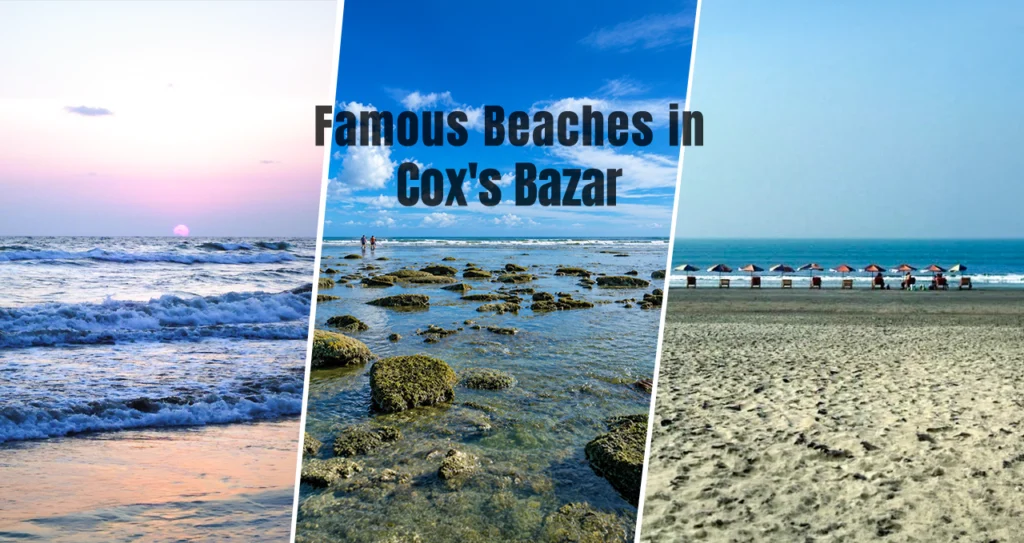
To be straight with you about the famous beaches in Cox’s Bazar before you book anything, there is no single beach here, even on the world’s longest natural sea beach. Cox’s Bazar is a chain of them, and the rookie move is to pick one stretch, grab the photo, and fly home thinking you have done it. The sand? Gold. Mile after mile. Three names keep coming up at day’s end. Laboni, the busy one in the middle of town.
Kolatoli, the loud one with the jet skis. And Inani, the far one where coral stones stand in still water and the crowds thin to almost nobody. That is what this guide walks through, the Famous Beaches in Cox’s Bazar: Laboni, Kolatoli & Inani Beach.
Once the sand is out of your shoes, come find us at Sea Mount Beach Cafe, right on the coast, grilling seafood over open flame.
Overview of the Famous Beaches in Cox's Bazar: What Makes Them Special?
If Bangladesh had to nail one coast to a poster, this would be it. Millions roll through every year chasing the same few things. Wide sand. Salt in the wind. Seafood off a boat that morning, not out of a freezer. That is the pull of the famous beaches in Cox’s Bazar.
Geography and World Record Status
The 120-kilometre figure gets quoted everywhere because it happens to be the official one: longest natural sand beach on the planet. South-eastern Bangladesh, flat approach into the water — no sudden drop, which is why parents let the kids paddle. Green hills to one side, open sea to the other.
The Distinct Character of Laboni, Kolatoli, and Inani
Three beaches. Three different reasons to show up.
Laboni: the town beach. Markets, snack carts, evening footfall.
Kolatoli: the resort strip. Hotels stacked along the sand, water-sports operators outnumbering the sunbathers.
Inani: the getaway. Sand, coral, tide pools. Midweek, almost empty.
- Laboni Beach, in main Cox’s Bazar town. Loud, walkable, easy on the legs. The draw: sunset, Burmese market, street food carts.
- Kolatoli Beach, at the hotel zone entrance. Busy, late-running, modern. The draw: water sports, seafood restaurants, nightlife.
- Inani Beach, 25 km south via Marine Drive. Quiet, scenic, near-empty midweek. The draw: coral stones, clear water, silence.
Laboni Beach: The Central Hub for Culture and Shopping
Picture Cox’s Bazar in your head. That postcard shot? That is Laboni, the most visited of the famous beaches in Cox’s Bazar. Right up against the main town, which is why families and first-timers wash up here, everything within a short walk.
Top Things to Do at Laboni Beach
Two options. Walk. Or pay 50–100 taka for a plastic umbrella chair and watch the waves from that. Around 5 PM the sunset crowd thickens at the waterline — phones out, kids chasing crabs in the foam, the smell of frying onions drifting from the cart vendors.
Behind the sand, the markets open up. Worth browsing:
- Handwoven tribal shawls and fabrics, Rakhine weavers sell direct, prices lower than Dhaka
- Shell bangles, pearl strands, the usual souvenirs (the first price quoted is fiction. Haggle)
- Street food, fuchka with the spicy tamarind water, fried fish on bamboo skewers, green coconuts hacked open in front of you
- Dried fish (shutki) from the morning catch, pungent enough to spot from ten stalls away
Best Time to Visit and Accessibility
November through March. Winter, dry, the humidity drops to something close to bearable. Auto-rickshaws and cycle rickshaws run constantly out of the town centre. If your hotel’s within a kilometre of the sea, walk, the traffic is worse than the heat.
Kolatoli Beach: The Heart of Action, Water Sports, and Nightlife
Kolatoli is the loud one. You can take a look at it near the entry of the hotel zone. Just you step out of your resort lobby and straight into the sand-and-jet-ski racket.
Water Sports and Adventure Activities
Everyone comes to Cox’s Bazar to do something louder than sunbathe. Kolatoli is your call. Operators line the beach morning to sundown, jet skis, parasails (the harness creaks but it holds), speedboat loops along the coast. Cash preferred, bookable on the spot.
Hand over taka only after this checklist:
- Life jacket on, buckled, not draped. The jet ski guys skip it unless you ask.
- For parasailing, watch the crew check the ropes and harness on themselves. Remember, if you see any sign they are ignoring it, find another operator.
- Pick operators with a printed signboard and a license number. The bloke with one jet ski on the sand and no paperwork isn’t insured.
- Sometimes the sea may not be a good idea to go swimming. Skip the high-speed stuff if the sea’s choppy or it’s been raining. The Bay of Bengal doesn’t do forgiveness.
Dining, Nightlife, and Nearby Accommodations
Sunset doesn’t slow Kolatoli down. The strip behind the beach is mostly hotels and seafood restaurants stacked side by side — mid-range places, a couple of luxury ones, all sharing the same road. Buskers set up at the corners after dinner. Night-market stalls usually open once it’s properly dark. The open-air kitchens turn out grilled fish, king prawns, Bengali curries, and they don’t really shut.
Inani Beach: Golden Sands and Coral Stone Tranquility
Inani is the escape valve for when the town gets too much, and the calmest of the famous beaches in Cox’s Bazar. The water’s clear blue. Sand is gold, properly gold, not the over-saturated postcard kind. And it’s quiet, quiet enough that the small-crabs clicking in the foam is audible.
Exploring the Unique Coral Stone Formations
What makes Inani recognizable is the coral. Sharp-edged stones, green with moss, all over the shore. When the tide pulls back, the reefs surface and shallow pools collect between them, small fish, hermit crabs, the odd sea urchin.
The Coral zone has rules. Read these before you walk out:
- Show up at low tide. The stones need to be visible and dry to walk on safely, at high tide the whole zone is underwater.
- Don’t break the coral. Don’t step hard on it. Don’t take pocket pieces to take home. The reef here is fragile, and a generation of bad tourists would wreck it.
- Footwear matters here. Soft-soled shoes with grip, or proper sandals. Flip-flops slide on wet moss, and the coral edges will open a foot up fast.
Marine Drive Journey: The Scenic Route to Inani
The drive is half the point of going. Marine Drive Road follows the coast for 25 km — water on your left, hills climbing on the right, and the tarmac close enough to the surf that spray hits the windscreen when the sea’s rough. Best coastal drive in Bangladesh, no real argument. Halfway down, the terrace at Sea Mount Beach Cafe is open. Pull in. Get a green coconut or a plate of seafood snacks. Sit on the deck. Look at the water for a bit. Drive on when you’re ready.
Himchari Waterfall and Nearby Attractions
Most people break the Inani trip at Himchari National Park. The staircases up the hillside lead to a seasonal waterfall, dry through the summer, running properly after the monsoon. From the top you get a wide panorama over the Bay of Bengal. The climb is rough in the midday heat, so do it early.
Comparing the Famous Beaches in Cox's Bazar: Which One to Visit?
Which of the famous beaches in Cox’s Bazar you pick is really a question of what kind of day you’re after. The three stretches split along budget, energy level, and crowd tolerance, and they don’t overlap much.
Family Trips vs. Solo & Adventure Travel
Families tend to land at Laboni. Short walk to the Burmese market, gentle sand, and if anything goes wrong there’s a hotel and a pharmacy inside five minutes. Solo travellers and adrenaline types drift to Kolatoli — the water-sports operators and night markets there run past midnight. Inani is for the people who came to switch their phone off. Quiet, natural, almost empty midweek.
Budget Considerations and Hotel Proximity
Laboni runs cheapest, guest houses and budget hotels cluster behind the beach, eating options within walking distance, no transport needed. Kolatoli is the mid-range heart, with a couple of high-end resort names right on the main road. Inani skews upmarket, the resorts there are quiet and expensive, and getting back to town for shops means a 25-km ride up the coast.
- Laboni Beach, family trips and shopping. Walking distance to budget hotels, town markets, the Burmese market.
- Kolatoli Beach, active travellers and water sports. Modern resorts, seafood restaurants, late-running nightlife.
- Inani Beach, nature retreat and photography. Quiet luxury resorts, clear water, coral formations.
Essential Travel Tips for Visiting Cox's Bazar Beaches
A little planning saves you the usual beach-trip grief. Worth keeping these in mind before you head out:
- Best Season: November through March. Dry season, the heat backs off, and the sea flattens out enough for safe swimming. Monsoon (June to September) is rough water and steady rain, skip it.
- Local Transport: CNG auto-rickshaws for short hops. For the Marine Drive run down to Inani, hire an open-air Chander Gari, the wind in your face, the view unfiltered.
- Tide Awareness: Check the day’s tide times before you swim anywhere, and especially before you walk out onto the coral at Inani. The sea comes in fast.
- Sea Safety: Swim only where the flags are. Lifeguards mark the safe stretches for a reason, Laboni and Kolatoli both pull rip currents at certain points along the shore.
- Beach Etiquette: Use the bins. The plastic problem on this coast is already bad, and tourists adding to it doesn’t help. As for the coral, leave it alone. The reef’s been around longer than the hotels have.
Conclusion
So that is the short of it, the Famous Beaches in Cox’s Bazar: Laboni, Kolatoli & Inani Beach. Laboni for the culture and the market crawl. Kolatoli for the water toys and the night out. Inani for the coral and the quiet. After a day of all that, Sea Mount Beach Cafe is the place to land. Come for the fresh seafood, stay for the sunset.
FAQS
Laboni, almost always. The town hotels back right onto it. The sand shelves into the sea on a gentle angle, so kids paddle without any sudden drop-off. And if someone needs shade or a snack, the Burmese market is five minutes inland.
About 25 km south, down Marine Drive Road. By auto-rickshaw or the open-air Chander Gari, you’re looking at 40 to 50 minutes, longer if you stop for photos, which you will.
Safe enough, with caveats. Use licensed operators only, the ones with a printed signboard. Buckle the life jacket, don’t just drape it over your shoulders. Check the parasailing harness yourself before the crew hooks you in. And when the guide says something, do it, they read the sea daily; you don’t.
No. Taking coral off the beach is prohibited, and there’s a reason, the reef is part of what keeps the shoreline alive. Pocket a piece and you’re helping wreck the place.
Late afternoon, ideally timed to low tide. That’s when the coral stones surface and the tide pools form between them, you can walk the reef on foot without wading. When the visit ends at sunset, the light goes orange over the Bay around 5:30 PM in winter, and it’s worth waiting for.
Laboni is the town beach. Shopping, street food, evening crowds. Kolatoli is the resort strip, luxury hotels, water sports, and late nightlife. Inani is the quiet one down the coast: coral stones, clear water, and not much else. That last part is the whole point.