The new train service from Dhaka to Cox’s Bazar has opened a new horizon in the tourism industry of Bangladesh. This train journey is not only convenient for passengers, but also has made the journey easier for tourists by creating direct rail links with different cities of the country.
Passengers of all ages who prefer intercity compartments or standard seating can now reach Cox’s Bazar from Dhaka quickly and comfortably. Train departure timing is also accurate, so planning the journey is much easier.
This Dhaka-Cox’s Bazar train service is not just a means of transportation; it is an important part of the Bangladesh Railway and Bazar Railway project. The new Cox’s Bazar route and railway connectivity are working as a strong impetus for the tourism industry.
When you go to Inani Beach after a long train journey, don’t forget to go to Sea Mount Beach Cafe for something really fresh. Whether you sit at our restaurant and watch the sea waves, have a hot seafood platter, or a continental item, everything will make your experience completely different. The atmosphere of our restaurant is quite great for chatting with friends or family. And the quiet atmosphere of Inani Beach is a bonus. You can easily put this cafe on your tour list for quality food and a beautiful location!
Dhaka to Cox’s Bazar Train
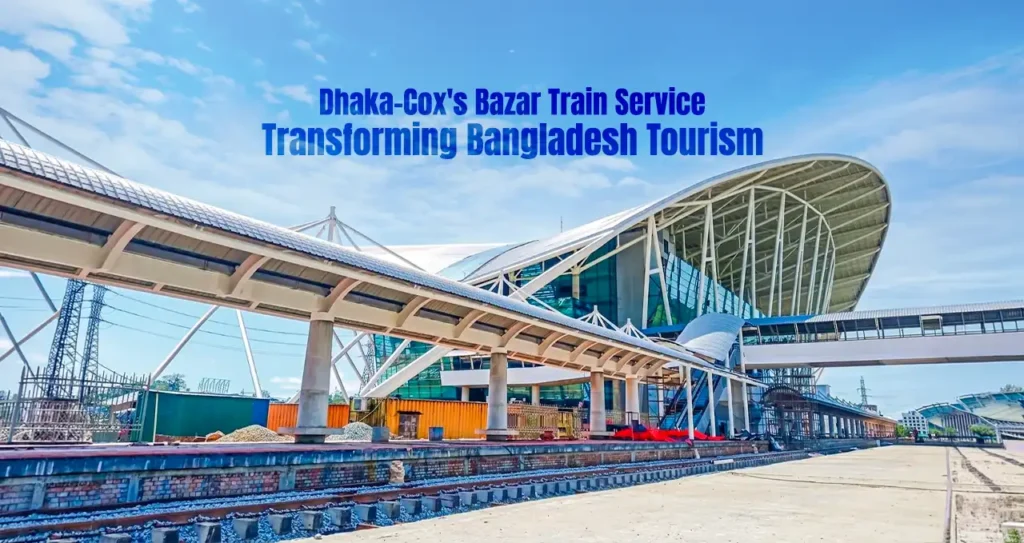
For those who repeatedly rush from Dhaka to the sea, train service is now the biggest relief. With that eye-catching Iconic Station in the shape of an oyster and all the modern amenities, this modernization of the Bangladesh railway has transformed the travel experience. Now we don’t have to worry about long bus journeys with traffic jams; rather, travel has become comfortable with this new touch of intercity transportation.
The biggest advantage is saving time. Starting from Dhaka at 10:30 PM, you can reach Cox’s Bazar the next morning, which is a huge achievement for passengers. The pleasure of seeing the outside view through the train window is different. Since this direct rail link was established, traveling to Cox’s Bazar is now much more accessible and affordable. This transportation revolution has not only made our travel easier, but has also brought a great change in the country’s tourism sector. In addition, the seating arrangement and train speed have been kept in mind, keeping passenger convenience in mind.
Cox's Bazar Railway Project and Tourism Impact
Our Cox’s Bazar Railway Project is not just a railway line, but a master plan to develop Cox’s Bazar as a complete Tourist City. With the help of this project, all kinds of possibilities are emerging in the Tourism Industry that no one thought of before. Now, not only the sea view, but also the economic picture of the Bazar District and its surrounding areas is changing. With the development of modern railway connectivity, tourists from any part of the country can now come to the blue waters of Cox’s Bazar easily.
Tourist Access via Bazar Route
Earlier, going to Cox’s Bazar meant a long bus journey, but now the train journey on the Dohazari to Cox’s Bazar route has made that trouble forgotten. With this improved railway connection and direct rail link, the main city can be reached directly via Chittagong, Ramu, and Chakaria. The view that can be seen through the train window while passing through the forest near Ramu station is an added bonus for tourists. Due to this easy access, anyone can now visit Cox’s Bazar with a quick plan.
Train Schedule, Distance, and Journey Duration
Compared to buses, this train journey is not only comfortable, but also saves a lot of time. Usually, a non-stop train from Dhaka takes about 8 hours 15 minutes to 8 hours 45 minutes to reach Cox’s Bazar.
Currently, two popular trains, Cox’s Bazar Express and Parjatak Express, operate regularly on this route. The train schedule is given below:
- Cox’s Bazar Express (813): Departs from Dhaka at 10:30 PM and reaches Cox’s Bazar at 7:20 AM the next day.
- Tourist Express (815): Departs from Dhaka at 8:00 PM and reaches Cox’s Bazar at 4:30 AM.
- Return journey: Trains usually depart from Cox’s Bazar for Dhaka at 12:40 PM and 8:00 PM.
The specialty of this train service is its modern coaches and punctuality. For those traveling with their families or alone, the comfortable seats and safe environment of the train play a great role in relieving the fatigue of this long journey.
Railway Infrastructure and Stations
Major improvements have been made in the railway infrastructure to make the train journey to Cox’s Bazar more comfortable and safe. One of the most striking features of the new Cox’s Bazar railway station is the oyster-shaped station, which has been designed not only for its beauty but also to facilitate passenger movement. The single railway line and well-organized railway track from Dohazari to Cox’s Bazar have helped in making the journey faster and smoother. The stations have not only provided convenience to passengers, but have also strengthened the entire railway network. The design of each railway station is passenger-friendly and optimized to facilitate intercity communication.
Technological Advancements in Rail
The country’s rail lines have been made more efficient by using new rail links and improved rail route technology. The intercity train journey between Dhaka and Cox’s Bazar via the Chattogram route has become faster and safer. This technological development is expanding the entire railway network and ensuring the convenience of passengers.
Fare, Accessibility, and Traveler Benefits
The train fare from Dhaka to Cox’s Bazar is now much more competitive and convenient. For tourists, the Cox’s Bazar Express is much faster and more comfortable than buses or other forms of transportation. Passengers can reach the sea beach directly by train, which has further enriched Cox’s Bazar as a popular beach town and an iconic tourist destination.
Travelers can now easily travel to Cox’s Bazar via train, which has the advantages of saving time, comfortable seating, and scenic views. This journey is not only convenient but also makes the passenger experience more enjoyable.
Environmental and Socio-Economic Impact
Cox’s Bazar Railway Project has not only made travel easier, but has also brought about a revolutionary change in the livelihood of the local people. Traveling by train has a much lower carbon footprint compared to buses, which is very helpful in preserving the fragile biodiversity of Cox’s Bazar and the natural balance of the sea beach. This environmental awareness will make our tourism more sustainable in the long run.
In addition, the economy of Bazar District and its surrounding areas is now quite strong as a result of this rail connection. Due to the new railway access, tourists are no longer limited to the sea beach but can also easily go to tourist places like Matarbari or Inani in Maheshkhali. This has created new income streams for local small and big businessmen and increased employment. In simple words, this railway line has now become the lifeline of the economy of South Bengal.
Conclusion
There have been many changes made to the railway system to ensure that the train ride to Cox’s Bazar is more comfortable and safer. One such feature is the newly built Cox’s Bazar train station and its unique oyster-shaped design, which prioritizes passenger ease of movement. The single railway line and structurally sound railway track design from Dohazari to Cox’s Bazar allows passengers to have an expedited and seamless journey. Additional stations along this route have not only made traveling more convenient, but have also reinforced the entire railway system. Every station design is optimized for passenger movement and system functions, and to enhance greater intercity connectivity.
FAQs
The journey from Dhaka to Cox’s Bazar by this new train service takes approximately 8 to 9 hours. Compared to the previous journey methods, the Dohazari-Cox’s Bazar route modernizations done recently have made the travel experience more pleasant and hassle-free than ever before.
The fare of Cox’s Bazar Express is reasonably priced and comparable to bus fares. This service also offers passengers plush seating and ensures timely arrival to their destination, which adds to the value of this service.
Yes, intercity compartment services are available on every train. There are ample seating options available, and passengers may also enjoy the scenery outside the train window.
Due to this project, Cox’s Bazar is now developing into a full-fledged tourist city. Not only are tourists benefiting from the ease of rail connectivity, but the economy of local areas like Chakaria or Ramu is also booming.
The use of trains helps reduce environmental pollution, which is essential for protecting our biodiversity. In addition, new income opportunities have been created for locals as travel to areas like Matarbari or Inani is easier.